

Cost is a major factor when facing water damage issues in your home. Understanding the potential expenses involved can help you budget effectively for repairs and prevent further complications. You may encounter various costs depending on the severity of the damage, materials needed, and whether you choose to hire professionals or tackle it on your own. In this blog post, we will break down the typical costs associated with water damage repair and what factors can affect your overall expenses.
Understanding Water Damage Categories
The classification of water damage is crucial for determining the appropriate restoration method and costs. Understanding the different categories of water damage helps you assess the damage’s severity and potential health risks. Each category represents varying levels of contamination and requires specific treatment approaches. By recognizing these categories, you can make informed decisions about restoration services and the necessary protective measures for your property.
Clean Water Damage (Category 1)
Clean water damage refers to water that originates from a clean source, such as a burst pipe or an overflowing sink. This type of water is not contaminated and poses minimal threat to your health. However, it’s important to address the issue promptly to prevent escalation into more severe damage.
Gray Water Damage (Category 2)
Between clean and black water, gray water damage comes from sources that may contain contaminants, such as washing machines or dishwashers. While not immediately hazardous, it is advisable to handle this type of water with caution since prolonged exposure can lead to health risks.
Further, gray water can introduce harmful pathogens and pollutants into your living space. It is crucial to address this type of damage swiftly to reduce the risk of secondary effects, such as mold growth or structural issues. Cleaning and disinfecting areas affected by gray water should be a priority to maintain a safe environment for you and your family.
Black Water Damage (Category 3)
Water damage classified as black water comes from highly contaminated sources, such as sewage backups or floodwater. This type of water poses significant health risks due to the presence of pathogens, chemicals, and other hazardous substances.
Gray water damage can quickly escalate to black water if left untreated. It’s vital to seek professional help immediately, as handling black water presents serious health risks, including infections and respiratory issues. Proper containment and cleanup by a qualified restoration service is necessary to ensure your safety and protect your property from further damage.
Common Types of Water Damage
Clearly, understanding the various types of water damage can help you prep for potential repairs. Common damage types include:
- Flooding from natural disasters
- Leaking pipes and plumbing issues
- Appliance malfunctions, like broken dishwashers
- Roof leaks due to storm damage
- Groundwater intrusion in basements
Thou can seek more details on how much does it cost to fix water damage?
| Common Type of Damage | Description |
| Flooding | Water from heavy rainfall or overflowing rivers. |
| Leaks | Slow water intrusion from burst pipes or fixtures. |
| Appliance Failures | Water damage caused by malfunctioning appliances. |
| Storm Damage | Water entry from wind and rain through damaged roofs. |
| Groundwater | Water from underground sources affecting your home. |
Structural Damage
By addressing structural damage promptly, you can prevent further deterioration of your home. Signs of structural damage often include bowing walls, cracks in the foundation, and sagging ceilings. If your property has sustained significant water damage, it’s crucial for you to consult a professional to assess the integrity of your structure and determine necessary repairs.
Flooring and Wall Damage
Water can severely compromise flooring and walls, leading to costly repairs. Depending on the extent of the damage, your flooring could become warped, and walls may show signs of discoloration or bubbling paint.
Flooring materials such as hardwood, carpet, and tiles are particularly vulnerable to water damage. While hardwood can warp and stain, carpets may trap moisture, leading to unpleasant odors. Wall materials can also erode, required full replacement in severe cases. It is crucial for you to monitor these areas closely to avoid long-term damage.
Mold Growth and Remediation
To combat mold growth, you must act quickly as mold develops rapidly in moist environments. This can impact your health as well as the structural integrity of your home.
Understanding the need for mold remediation is vital in protecting your living space. Prolonged exposure to moisture can lead to toxic mold, necessitating professional intervention to safely remove it. This process involves thorough cleaning, removal of contaminated materials, and prevention strategies to avert future growth. You should ensure your home is properly ventilated and dry to mitigate these risks.
Cost Factors
For anyone experiencing water damage, various cost factors can significantly influence your repair expenses. Consider the following:
- Extent of damage
- Type of water source
- Location and accessibility
- Presence of mold
- Equipment used for remediation
Recognizing these factors early can save you time and money. For a deeper understanding, check out Water Damage Restoration Cost [2025 Data].
Extent of Damage
One key determinant of your repair costs is the extent of damage incurred. A minor leak may only require simple repairs, while extensive damage could necessitate a complete restoration of affected areas. The initial assessment will provide a clearer picture of your needs.
Type of Water Source
For effective assessment and remediation, understanding the type of water source involved is critical. Water damage can result from clean water, gray water, or black water, each requiring varying levels of cleanup and repair work.
Hence, clean water from a burst pipe tends to be less expensive to remediate compared to gray water from washing machines or black water from sewage backups, which can involve extensive sanitization and rebuilding efforts. The higher the contamination level, the more comprehensive and costly the repairs will be.
Location and Accessibility
On another note, the location and accessibility of the affected areas play a significant role in repair costs. If the water damage is in easily accessible spaces, restoration work will typically be quicker and less expensive.
To elaborate, if the damage occurs in tight or hard-to-reach areas, such as behind walls or in crawl spaces, the labor costs can increase due to the added time and specialized equipment necessary to safely access and repair the damage. Understanding these dynamics will help you prepare for potential expenses effectively.

Average Repair Costs
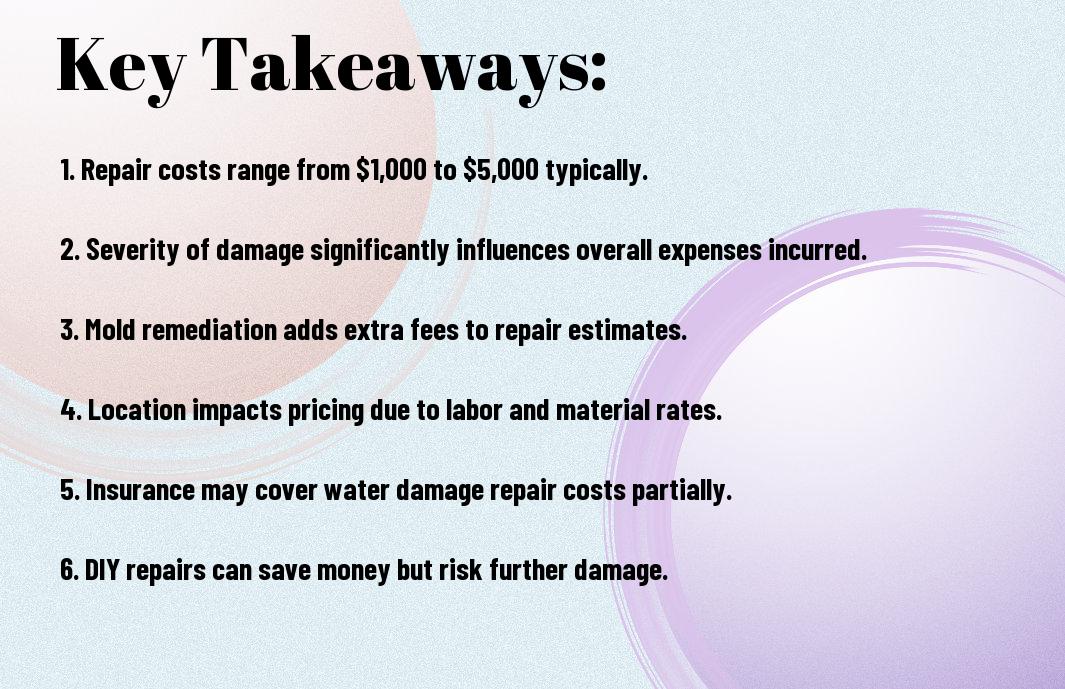
To understand the average costs of repairing water damage, it’s crucial to recognize that various factors can influence the price. Typically, you can expect to pay anywhere from $1,500 to $8,000 depending on the extent of the damage and the services required. This range reflects the necessary work for restoration, including extraction of water, drying, and repairs to affected areas.
Small-Scale Repairs
An example of small-scale repairs includes fixing minor leaks or replacing baseboards and flooring in a localized area. These repairs usually cost between $500 to $1,500, depending on the materials used and the labor involved, making it a manageable expense for homeowners.
Medium-Scale Repairs
Small-scale repairs can escalate when the damage involves multiple rooms or structural components in your home. In these cases, you might find costs ranging from $1,500 to $4,000, as the process may require more extensive water extraction, drying equipment, and repair work on drywall and insulation.
Also, medium-scale repairs may also necessitate professional assessments to prevent mold growth and ensure long-term stability of your home. Depending on your specific situation, you might have to replace ceilings, floors, or walls, all of which will contribute to the final costs.
Large-Scale Repairs
The most significant water damage instances often lead to large-scale repairs, which can range from $4,000 to $20,000 or more. Such situations usually involve extensive flooding or damage that requires complete restoration and rebuilding of affected areas.
Understanding large-scale repairs means recognizing that they frequently entail a multi-step process involving insurance claims, comprehensive evaluations, and potential renovations. This type of repair can take time, so you should factor in both the financial and temporal commitments when addressing serious water damage in your property.
Insurance Coverage
All homeowners should understand their insurance policy, especially when it comes to water damage. Most policies can help alleviate the financial burden of repairs, but coverage often depends on the specific circumstances of the damage and the terms set forth in your policy.
What Insurance Typically Covers
On average, homeowners insurance may cover water damage caused by sudden incidents, such as burst pipes or a roof leak. However, policies usually exclude damage from long-term leaks or flooding, so it’s important to review your particular coverage details.
Out-of-Pocket Expenses
Behind insurance coverage, some costs may still be your responsibility. This could include your deductible, which is the amount you pay before your insurance kicks in, as well as any repairs that fall outside the scope of your policy.
Expenses can vary widely based on the severity of the damage, the area affected, and the type of repairs needed. For example, if your deductible is $1,000 and your total repair costs are $5,000, you will need to pay out-of-pocket for the deductible while your insurance covers the remaining $4,000. Additionally, if the damage is not covered by your policy, you will be responsible for the full amount of repairs. It’s important to factor these potential costs into your budget when planning for water damage repairs.
Prevention and Maintenance
Unlike waiting for water damage to occur, taking proactive steps can save you time and money in the long run. Regular maintenance and preventive measures in your home are imperative for minimizing the risk of potential water damage. By being vigilant and addressing issues promptly, you can effectively protect your property and ensure a safer living environment.
Regular Inspections
Beside routine cleaning and upkeep, it’s vital to conduct regular inspections of your home’s plumbing, roof, and foundation. Look for signs of leaks, mold, or wear that indicate potential problems. Catching these issues early allows you to address them before they escalate into costly repairs.
Preventive Measures
About implementing preventive measures, you should focus on sealing gaps and applying weatherproofing to your home. Keep gutters clean and ensure proper drainage to divert water away from your property. Additionally, consider installing sump pumps and ensuring your roofing is in good condition to further mitigate risks associated with water damage.
It’s also advisable to regularly check for and address any bathroom or kitchen leaks. Installing waterproof membranes in areas prone to moisture can provide an added layer of protection. Remember that small adjustments can make a considerable difference in preventing water damage in the long run.
Early Detection Systems
Measures like installing water leak detectors, alarms, and monitoring systems can significantly reduce your risk of extensive water damage. These systems alert you to leaks and potential flooding, allowing for swift action before the situation worsens.
A combination of technology and awareness can make a substantial impact on preventing water damage. Early detection systems provide you with alerts via your smartphone, giving you peace of mind while you’re away. By incorporating these devices into your home, you can proactively protect your property from unforeseen leaks or flooding events.
Summing up
Summing up, the cost to repair water damage can vary significantly based on the extent of the damage and the materials affected. You might find that minor repairs range from a few hundred to a couple of thousand dollars, while extensive damage could escalate costs to tens of thousands. It’s important to assess your situation promptly and consider obtaining estimates from professionals to determine the best course of action for your property. Addressing water damage issues early can help mitigate costs and prevent further complications in your home.